Tuesday, November 22, 2011
peaceBOMB Jewelry - Bomb Shards Gone Good
peaceBOMB's silver bomb shard necklace, $400. 1 Necklace : 30 meters of bomb littered land
Oh, you know, that's just a Secret War bomb shard made into a necklace. This is as real as fashion can get. peaceBOMB's line of jewelry is all hand-cast from bomb shards discovered in Laos, then cast in sterling silver in NYC. The idea stemmed from a group of ten families who learned to reshape scrap metal into spoons to supplement their farming incomes. These families now also collaborate on peaceBOMB jewelry with Article 22 and the nonprofit RISE Project.
Peace Ribbon Bangle, $298 - 12 meters of land
For each piece of jewelry purchased, the socially conscious business Article 22 also makes a set donation equivalent to clearing a set amount of land in Laos of undetonated bombs and bomb materials (which is why the meters of land are listed). Because during the Secret War, between 1964 and 1973, 30 percent of the bombs did not detonate, and remain cast about the country, along with littered shards.
Tribal Spear Necklace, $190 - 16 meters of land
Tag Wrap Bracelet, $46 (interchangeable, differently colored wraps are also available for $12) - 6 meters
See the rest of the rest of the jewelry options or learn more about the peaceBOMB mission. It has a pretty impactful, visual website -- another study in how mission and design meeting for good and good looks.
Sunday, November 20, 2011
My Life: A Study in Blue
Friends, brunch, beach, blue. Happy.
Enjoy your week, all :)
Friday, November 18, 2011
The One-for-One Movement Debate
Warning: There are a lot of words below, and they are somewhat haphazardly organized. I promote many different types of nonprofits and for-profits with very different strategies on how to improve the world, which I believe is the only way to answer all the different facets of what is going on our country and the world. There isn't one right answer. However, we do need to be aware of our involvement in all these different strategies. And if you're shaking your fist at all the words right now, don't worry -- I'll post pretty things to apologize very soon.
One for one movements have been cropping up for a while now, and Toms Shoes is everyone’s go-to example. It can be found everywhere from my blog to adorable babies' tootsies to all over social media (#OMGILOOOVEMYTOMS!). Toms' hip branding is impeccable, its cause pure, its wide base of followers/customers enthusiastic. However, this also means Toms bears the brunt of being a negative example for those questioning the one-for-one strategy, and I've recently stumbled on numerous examples of this.
The first place was in Foreign Policy's November Issue, in the article "Haiti Doesn't Need Your Old T-Shirt," which talks about the West’s pattern of dumping extras on developing countries, as well as the detriments of a giant food aid industry. The first, donating cast-offs, the author says eases our guilty consumer consciences while taking away money from local economies (the article states that World Vision spends 58 cents per shirt on getting a donated shirt to Zambia, which is well within the cost of a secondhand shirt there). The second, giving food, directly translates into feeding the hungry, except we forget that it may completely miss the mark or devastate local economies. For example, “Between the 1980s and today, subsidized rice exports from the United States to Haiti wiped out thousands of local farmers and helped reduce the proportion of locally produced rice consumed in the country from 47 to 15 percent.”
The article also suggests that charitable giving may be down because philanthrocapitalism – here is where Toms is used as a prime example – is up. If you buy a pair of shoes knowing that it also provides a pair to someone in need, the theory is that you’re less likely to give an extra $50 to an organization that uses the money to strengthen local economies or fund that locally sourced food. While this is arguable – we buy shoes anyway, and it may be a happy bonus that may have slightly steered our decision, instead of a conscious “donation” – it’s a slightly scary concept. I mean, if marketing can successfully direct us away from wholehearted donation back into consumerism, we may be in trouble.
But there’s also the discussion about how aid has been failing anyway – the billions that have been pumped into Africa, it’s said, have left very little improvement, and a largely dependent and corrupt relationship. Companies such as Oliberté, which sources the materials for and assembles premium-fashion urban shoes in Africa, try to address this issue by using consumerism to create sustainable jobs, not raise money for aid. Towards the end of a YouTube video in which Oliberté founder Tal Dehtiar is explaining the start and motivation behind his company, he tells a brief story about a visit to a village while building the company when he asked someone why they weren’t buying shoes from the local cobbler. The response was: Why would we? Toms was coming soon and we'll get a pair for free.
While I was working for AmeriCorps, I was paid at poverty level, albeit American-style. I (still) know what it feels like to be barely scraping by. And yes, if you’re going to get something for free, you’re definitely not going to buy that exact thing anytime soon. However, I also know that when I’m dead broke, I still have to spend that money, so it would be interesting to know what the money they saved on shoes was going towards – locally grown food? Crappy imported food? Education? Other clothing items?
Anyway, the point Tal is suggesting is that donating doesn’t create a sustainable business model that empowers people to buy the things they need, like shoes, themselves. I’ve also heard mention of people who receive the shoes wondering why Toms doesn’t just buy them from local shoe makers.
Of course, this begets the question – is it better to be doing something than nothing at all? Should we shoe children that really may not have them otherwise while other local companies and international organizations are setting the groundworks for more sustainable paths out of poverty? Also, going back to the Foreign Policy piece, what organizations would they suggest donating to? Which do they even know of that in fact source food and clothing locally, instead of from drives or donations in the U.S.?
One company doing something interesting with the imported secondhand industry (and also squaring off with Toms, poor guy) is Project Repat, which I’ve also profiled. They actually collect now-ironic t-shirts that have been donated to developing countries, stamp them with where they were found, and sell them back to us silly Americans. In turn, the proceeds back sustainable development projects in the countries that the shirts were repatriated from.
Since they kicked off this repat project, they’ve done some investigating into the secondhand import business. They tell an interesting story of finally tracing the source all the way back, with the plan to be all huffy and tell the organizations that they’re wasting money and putting local businesses under … only to find out that the number of people employed THROUGH this industry itself is pretty remarkable. Not only do people work in distribution and sales, but there are also a decent number of artisans and seamstresses who take the old t-shirt material and refit them to local body types as well as make brand new things.
Right now, Project Repat is holding a Kickstarter campaign to raise funding to work with this secondhand-t-shirt-recreation industry. The plan is to make goods for developed country customers, such as shirts, skirts, and scarves, and the funds (as they’ve been doing) will go to sustainable development projects.
Anyway, winding down, I’d love to hear of other organizations that you all may know of that have unique solutions to any of the issues mentioned above, or your insight on the one-for-one movement and food aid industry in general. And until then, Happy Aloha Friday, all!
One company doing something interesting with the imported secondhand industry (and also squaring off with Toms, poor guy) is Project Repat, which I’ve also profiled. They actually collect now-ironic t-shirts that have been donated to developing countries, stamp them with where they were found, and sell them back to us silly Americans. In turn, the proceeds back sustainable development projects in the countries that the shirts were repatriated from.
Since they kicked off this repat project, they’ve done some investigating into the secondhand import business. They tell an interesting story of finally tracing the source all the way back, with the plan to be all huffy and tell the organizations that they’re wasting money and putting local businesses under … only to find out that the number of people employed THROUGH this industry itself is pretty remarkable. Not only do people work in distribution and sales, but there are also a decent number of artisans and seamstresses who take the old t-shirt material and refit them to local body types as well as make brand new things.
Right now, Project Repat is holding a Kickstarter campaign to raise funding to work with this secondhand-t-shirt-recreation industry. The plan is to make goods for developed country customers, such as shirts, skirts, and scarves, and the funds (as they’ve been doing) will go to sustainable development projects.
Anyway, winding down, I’d love to hear of other organizations that you all may know of that have unique solutions to any of the issues mentioned above, or your insight on the one-for-one movement and food aid industry in general. And until then, Happy Aloha Friday, all!
Wednesday, November 16, 2011
Scout & Catalogue Tie-Dye Turbans
Sometimes there are just pretty things you want to share. This is one of those days -- these tie-dye turbans aren't even available for purchase, but were a Scout & Catalogue happy mistake. And it turned out lovely.
Tuesday, November 15, 2011
Kora: This Jewelry Is the Cow's Horn
Wide Tri Wrap Bangle Set, $150
Mmk, the title's a bad play on "bee's knees." But seriously, there's nothing bad about Kora. This jewelry is SO PRETTY in an "I'm tough and super independent and Africa is the shit, don't mess with me but yes, I'm gorgeous, admire away" way. Which I could use a little bit of right now, so bring the bling on!
Maasai Necklace, $230
This line "merges the worlds of beautiful jewelry and sustainable business development in Africa with the belief that both can and will ultimately benefit." Every piece is handmade by an artisan in a developing African community using recycled materials: cow horn and bone, aluminum, brass, and glass. They even describe the entire background of the materials here. And if you want to learn about the main artisans, there's also a link for that!
100 percent of this necklace's proceeds go to the Uweza Aid Foundation, located in Kenya's Kibera slum. Learn more about the organization here.
Ceremonial Ring 1, $30
Kora means "work" in Kinyarwanda, Rwanda's native langauge. Just a fun little tidbit for your day, courtesy of a sexy tough jewelry line. Can't get much better than that.
Sunday, November 13, 2011
1Band1Brand: The Music and Fashion Matchmaker
I just read the a New York Times Sunday Review piece "Generation Sell." It was creepily spot-on, successfully making me feel wholly unoriginal and inspired to rebel at the same time (though, to be fair, I want to run away screaming every time I hear the words "personal branding," so I'm already inclined). However, the fact that such a broad movement is happening everywhere from Brooklyn to Honolulu (holla!) demonstrates that our era is one of helping others while monopolizing on creativity and independence, which I have to admit, doesn't sound half bad.
Meet: 1Band1Brand. This company epitomizes what the article discusses -- that our generation is one of the small, socially conscious entrepreneurs, be them a band or a brand. This business puts people in touch with up-and-coming independent music makers and fashion brands, which followers may not have found otherwise in the sea of information called the Internet, but will certainly appreciate. Sort of a 3-in-1 example, if you will.
1Band1Brand is how I found Love Nail Tree, which I profiled on Friday. And whose necklace, Take Aim, I desperately want (pictured above).
This week, fashion label Jedidiah (which I've also mentioned previously and is pictured above) and the band Empires (pictured below) are profiled.
Be warned: You will have to subscribe to the weekly email to see the previous brands. Unless you know the tricks, like me (see previous bands and brands). But there ain't nothin' wrong with getting that email and discovering a new tune and treat each week!
Hope you all have a lovely Monday.
Meet: 1Band1Brand. This company epitomizes what the article discusses -- that our generation is one of the small, socially conscious entrepreneurs, be them a band or a brand. This business puts people in touch with up-and-coming independent music makers and fashion brands, which followers may not have found otherwise in the sea of information called the Internet, but will certainly appreciate. Sort of a 3-in-1 example, if you will.
1Band1Brand is how I found Love Nail Tree, which I profiled on Friday. And whose necklace, Take Aim, I desperately want (pictured above).
This week, fashion label Jedidiah (which I've also mentioned previously and is pictured above) and the band Empires (pictured below) are profiled.
Be warned: You will have to subscribe to the weekly email to see the previous brands. Unless you know the tricks, like me (see previous bands and brands). But there ain't nothin' wrong with getting that email and discovering a new tune and treat each week!
Hope you all have a lovely Monday.
Friday, November 11, 2011
Love Nail Tree = Straight Lovin'
Says Michelle Madsen of Love Nail Tree, "Each design has a story/meaning/inspiration that is printed on the inside tag of the shirt. This is our medium for addressing issues that we feel need to be talked about. We also do have light-hearted tees and messages that are meant to be inspiration. We just started doing this with the jewelry as well. For example, we have an arrow shaped pendant that has engraved "TAKE AIM" on the back."
Take Aim, $38
If the quote didn't give the secret away, Love Nail Tree is an L.A.-based company that uses shirts to raise awareness of societal issues. Its bling is also pretty awesome (and affordable!), and everything is made in Los Angeles. The t-shirts are 100 percent cotton, and much of the jewelry is made with repurposed antiques.
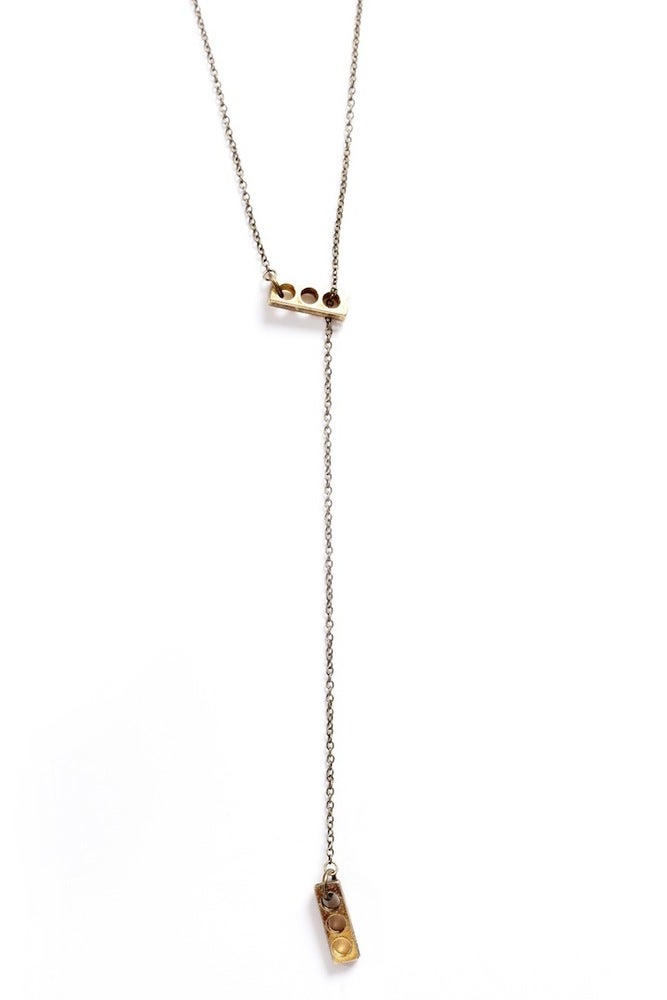
Bricks, $22 (Want!)
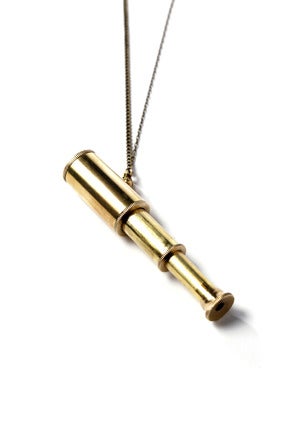
Telescope, $32 (It even collapses!)
Livin' on Dreams, Women's Crop, $38
Also, I like the line that accompanies every shirt on the website: "We will change the world with the stories we tell." Every t-shirt's online page is accompanied with such a story.
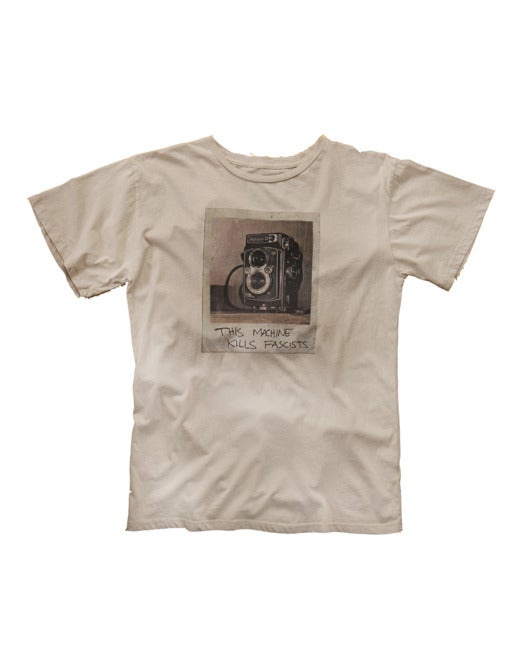
Camera Kills Fascists, Men's T, $32
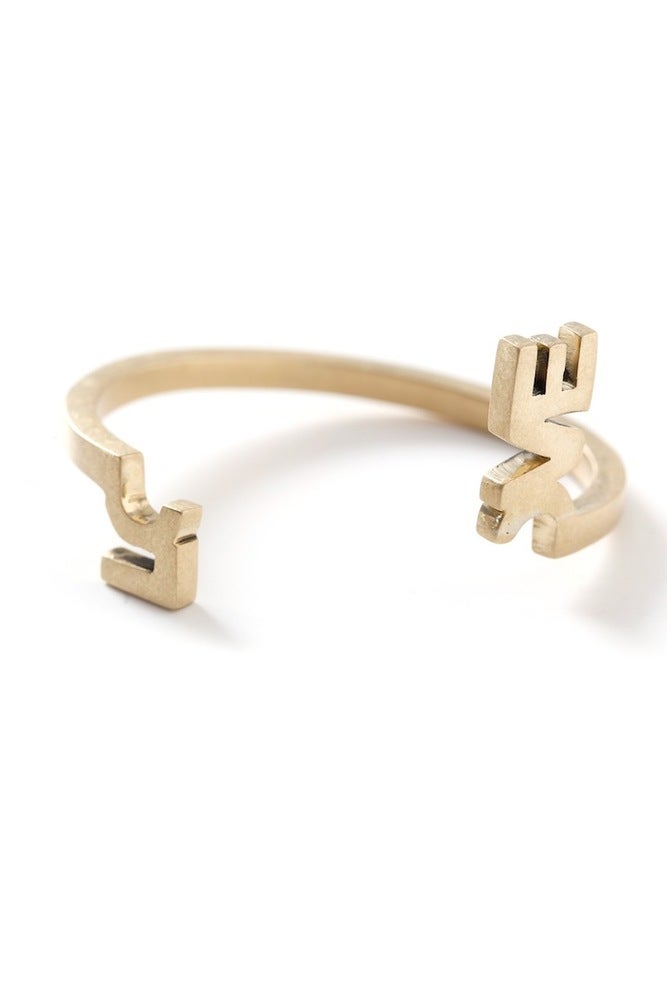
Love Cuff, $38
Check out the Love Nail Tree website and shop for yourself -- guarantee you'll find a treat and story or two.
Find out Monday how I discovered Love Nail Tree! Hint: It involves pairings and tunes (and it's not a blind date at a salsa class).
Happy Aloha Friday! Woooo!
Subscribe to:
Posts (Atom)